

On December 16, 2025, the U.S. government significantly expanded its US travel restriction, increasing the number of affected countries from 19 to 39. This new proclamation represents the most sweeping expansion of U.S. travel limits since 2017 and has raised understandable questions for immigrants, founders, professionals, students, families, and employers around the world.
At Agora, our role is to separate facts from fear and help individuals understand what this policy actually does, who it affects, and how to plan responsibly in the current current us travel restrictions environment.
This guide explains the expanded travel ban in plain language and outlines what affected individuals should consider next.
What Happened?
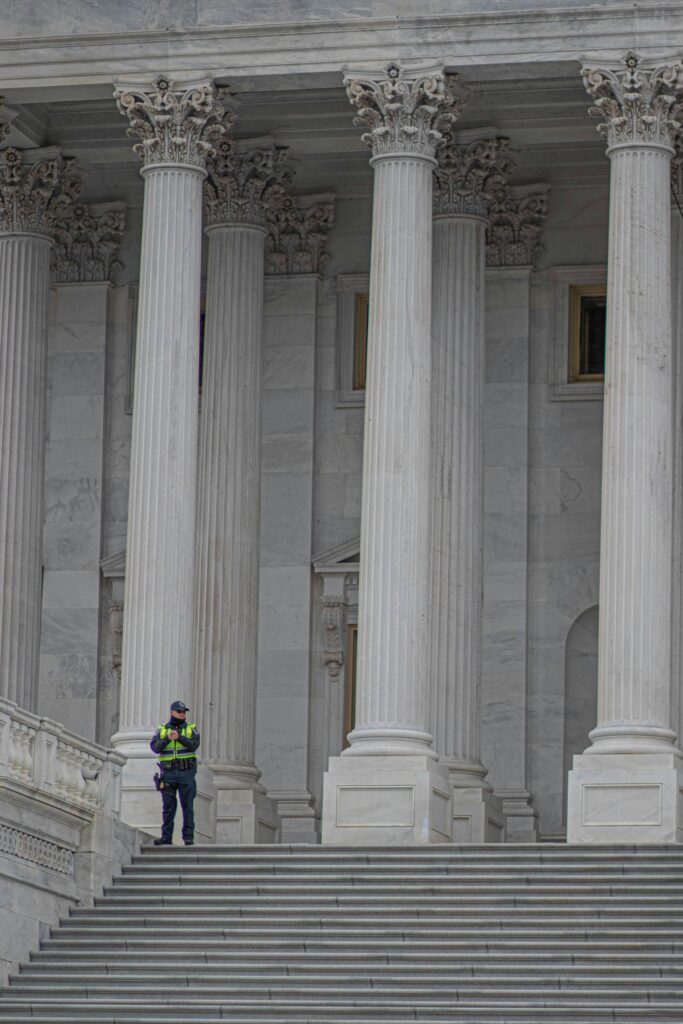
On November 26, 2025, Afghan national Rahmanullah Lakanwal shot two West Virginia National Guard members near the White House, killing Army Specialist Sarah Beckstrom, 20, and critically wounding Air Force Staff Sergeant Andrew Wolfe, 24.
The administration immediately froze Afghan visa processing and paused all asylum and green card decisions for 19 restricted countries. On December 16, less than three weeks later, President Trump expanded the us travel restriction from 19 to 39 countries, explicitly citing the shooting as justification for enhanced vetting and border security measures. The new US travel restriction policy has also been traced to this event.
What Changed in the December 2025 US Travel Ban
The new US travel ban update today, which takes effect January 1, 2026, expands travel restrictions USA to 39 countries across Africa, the Caribbean, the Middle East, and the Pacific. According to the administration, the expansion is based on concerns around screening, identity verification, overstay rates, and information sharing between governments.
The policy divides countries into two groups:
- Countries under full suspension
- Countries under partial restrictions
It also adds sweeping new limits on individuals traveling with Palestinian Authority–issued travel documents.
Countries Under Full Suspension
Nationals from 17 countries are barred from entering the United States on both immigrant and non-immigrant visas. These include:
Afghanistan, Myanmar (Burma), Chad, the Republic of Congo, Equatorial Guinea, Eritrea, Haiti, Iran, Libya, Somalia, Sudan, Yemen, Burkina Faso, Mali, Niger, South Sudan, and Syria.
Individuals traveling on Palestinian Authority–issued documents are also subject to complete restrictions.
For nationals of these countries, new visa issuance is largely blocked with the us travel ban update today. Only narrow exceptions are allowed.
Countries Under Partial US Travel Restriction
Fifteen additional countries are now subject to partial restrictions. For these countries, the policy blocks immigrant visas and limits specific nonimmigrant categories, particularly:
B-1, B-2, B-1/B-2, F, M, and J visas
Countries under partial restriction include:
Angola, Antigua and Barbuda, Benin, Côte d’Ivoire, Dominica, Gabon, The Gambia, Malawi, Mauritania, Nigeria, Senegal, Tanzania, Tonga, Zambia, and Zimbabwe. Several countries from earlier bans remain partially restricted as well.
Importantly, partial restriction does not mean all travel stops. It means tighter scrutiny, limited validity, and reduced availability for certain visa categories.
Who Is Not Automatically Affected
The proclamation preserves several key exceptions:
- Lawful permanent residents
- Individuals with valid, existing visas
- Diplomatic and international organization visas
- Certain athlete visas
- Limited humanitarian cases
- Case-by-case national interest exceptions
Valid visas and green cards remain usable, although travelers should expect enhanced screening at ports of entry
How This Affects Different Immigration Paths
Visitor, Student, and Exchange Visas
Tourist, student, and exchange visas are the most directly impacted. For many affected countries:
- New applications in these categories will be denied
- Renewals may no longer be possible
- Reentry after travel carries additional risk
These pathways are no longer reliable planning tools for long-term U.S. presence.
Family-Based Immigration
Family reunification is not fully eliminated, but it is more constrained. The government has narrowed family-based carve-outs due to documented fraud concerns, meaning stronger documentation and longer timelines are now the norm
Employment-Based Immigration
Employment-based immigration has not been cancelled with the US travel ban, but where and how it is completed matters more than ever.
USCIS continues to adjudicate employment-based petitions inside the United States. However, immigrant visa issuance at U.S. embassies in affected countries may be delayed or unavailable for extended periods.
This has created a practical split:
- USCIS processing continues
- Embassy processing is the bottleneck
As a result, individuals already inside the U.S. in lawful status are in a materially stronger position than those relying entirely on consular processing abroad.
O-1, L & H Visas
O-1 visas for individuals of extraordinary ability remain unaffected by the expanded travel ban. USCIS continues to process O-1 petitions, and consular issuance remains available. Other visas like L and H visas are also not impacted.
In the current us travel restriction environment, O-1 visas have become one of the most stable and flexible pathways for qualified professionals, founders, creatives, and technologists. The O-1 visa pathway has demonstrated exceptional stability, with 91%, 94% and 92% approval rate between 2021 and 2023.
O-1 visa has a processing time of approximately 7 months for standard cases, or 15 business days with premium processing.
Unlike visitor and student visas that are directly blocked by the travel ban, the O-1 offers flexibility for professionals in emerging fields like artificial intelligence, with recent USCIS guidance clarifying that beneficiaries can even have a separate legal entity they own serve as the petitioner, and extensions can be granted for up to 3 years for continuing projects.
In the current environment, the O-1 visa has become one of the most reliable pathways for qualified professionals, founders, creatives, and technologists from affected countries. It allows “dual intent,” meaning O-1 holders can simultaneously pursue permanent residency through routes like EB-1A or EB-2 National Interest Waiver while maintaining their temporary status.
For individuals from travel ban countries who are already in the United States or have approved petitions, the O-1 provides a stable foundation that is not subject to the geographic restrictions affecting other visa categories.
The pathway remains particularly valuable for those who can demonstrate extraordinary ability through awards, publications, leadership roles, or significant contributions to their field, criteria that transcend the country-based limitations of the current travel restrictions. Check your eligibility here.
What This Means in Practice
The US travel ban does not end U.S. immigration. It changes the strategy.
Key realities to understand:
- Location matters more than ever
- USCIS is more reliable than embassies right now
- Merit-based pathways are more resilient than entry-based ones
- Timing and sequencing are critical.
For many individuals, success now depends not just on eligibility but on planning the right order of steps.
What You Should Do Now
If you are affected by this us travel restriction policy:
- Do not assume your case is cancelled
- Avoid unnecessary international travel if your status is sensitive
- Gather strong identity and civil documentation early
- Seek professional guidance before filing or traveling
- Plan based on current realities, not past timelines
Employers should audit their workforce, file extensions early, and prepare documentation showing business necessity and national interest where applicable
How Agora Can Help
Agora works with founders, professionals, creatives, and global talent to design immigration strategies that hold up in complex policy environments.
If you are unsure how this travel restrictions usa policy affects your case or how to move forward safely, we encourage you to book a one-on-one strategy session with our team.
Understanding the US travel restriction system is the first step. Planning wisely is the next. Book a clarity call with AgoraVisa today!
Final Thought
The immigration system has not closed with the expansion of the US travel restriction. It has only become more selective, more procedural, and more dependent on strategy. Good luck!